
Why Growing Retail Chains Need Centralized Operational Monitoring

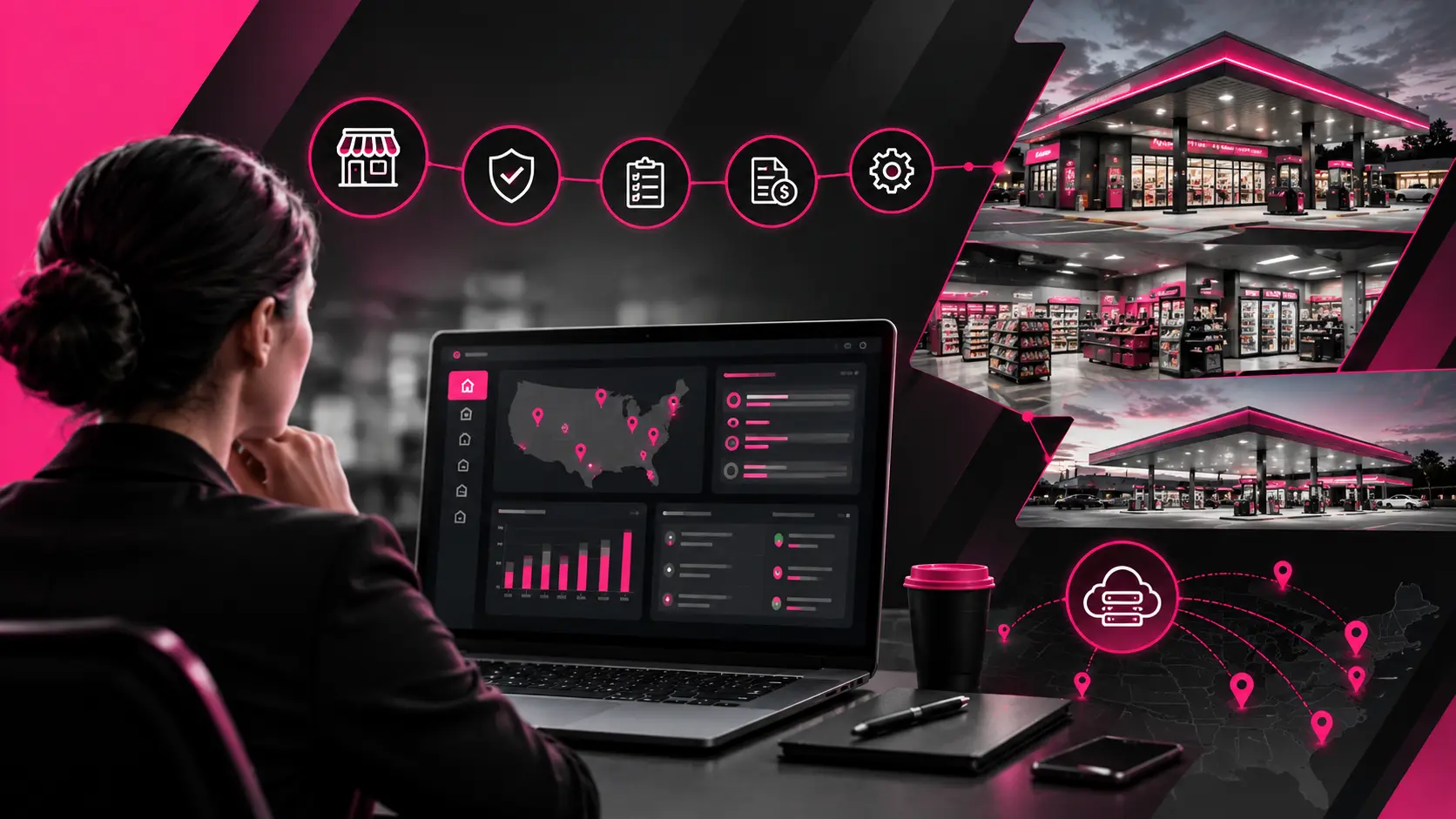
For growing convenience retail chains, expansion creates a challenge that revenue alone cannot reveal: operational inefficiencies multiply as more locations, employees, transactions, and suppliers enter the business. A minor data gap or an unrecorded cash payout at one store might seem insignificant. Repeated across a multi-store network, however, these small discrepancies can erode profitability and make consistent performance harder to maintain.
Centralized operational monitoring helps retailers address this challenge by bringing store-level information, standardized procedures, and verification processes into a coordinated system.
Instead of relying exclusively on historical reports or disconnected tools, operators can identify exceptions earlier, investigate discrepancies, and maintain consistent oversight across locations. Platforms such as the MostEdge MercuryOne dashboard support this approach by bringing essential operational data into one place.
The Cost of Growth: Small Leaks Scale Faster Than Revenue
Data from the National Association of Convenience Stores (NACS) highlights the margin pressure facing convenience retailers. In 2025, fuel accounted for 65.0% of industry sales dollars but generated only 38.8% of gross profit dollars. This makes effective margin management particularly important for operators balancing fuel operations with in-store merchandise.
As chains expand, the challenge becomes more complex. A pricing discrepancy, an unrecorded expense, or an inconsistent reconciliation process can affect individual locations before leadership recognizes a wider pattern.
Profit margins in convenience retail are thin. NACS has historically reported industry pretax profit at roughly 1% of total sales, including fuel (CSP Daily News, citing NACS 2012 data). Consider an illustrative store operating on a 1% net profit margin. If it loses $50 through an inventory or cash discrepancy, it must generate another $5,000 in sales to recover that loss, assuming the additional sales earn the same 1% margin. Actual margins vary widely by retailer, fuel mix, and year.
The impact can compound across multiple locations. If the same $50 loss occurs at 15 stores each day, the potential exposure reaches $750 daily, or $22,500 over a 30-day month. This is an illustrative calculation, not an estimate of typical industry losses.
For expanding retailers, protecting existing margins requires more than increasing sales. It requires identifying recurring operational weaknesses before they become expensive chain-wide problems.
Why Retail Operational Visibility Becomes Harder as Chains Grow
When an owner manages one or two stores, direct observation can help identify problems quickly. As the business grows, leadership cannot personally oversee every register, shift, delivery, and reconciliation. Three operational weaknesses become particularly difficult to manage.
- Lottery accounting and manual payouts: Lottery transactions and cash payouts may involve separate workflows or manual records. When employees pay a delivery driver from the register or process a payout without the required documentation, the resulting cash movement may not reconcile cleanly with recorded transactions.
- Inconsistent store procedures: Without standardized processes, individual locations may handle shift closeouts, register voids, refunds, and inventory discrepancies differently. This makes comparisons between stores less reliable and increases the effort required to investigate unusual results.
- Delayed shortage detection: When reconciliation depends entirely on individual store managers, owners may discover cash or inventory discrepancies days or weeks after they occur. By then, transaction details may be harder to retrieve, and the employees involved may have worked several additional shifts.
These problems share a common cause: retailers lack a consistent way to review operational activity, verify records, and escalate exceptions across the entire network.
Why Retail Dashboards Alone Cannot Prevent Losses
A centralized retail dashboard gives operators a consolidated view of store performance. The MercuryOne dashboard helps bring operational information together so leadership can review relevant store data without switching between disconnected reporting screens.
However, visibility and verification are different capabilities. Centralized Operational Monitoring dashboard can display information recorded by connected systems, but it cannot independently confirm that every transaction was entered correctly or that every cash movement was documented. Its effectiveness also depends on the underlying systems, available integrations, and the quality of the data being captured.
Two limitations deserve particular attention:
- Missing transactions: If a cash payout happens entirely outside the POS system and no alternative record captures it, the dashboard may have no information about that activity. The absence of an alert does not establish that the transaction never occurred.
- Incorrect recorded information: If an employee enters an incorrect price or a system uses an outdated product configuration, reporting may reflect the recorded figures without independently confirming their accuracy.
Losses also extend beyond theft. In the National Retail Federation’s National Retail Security Survey (2017 edition), administrative and paperwork errors accounted for 21.3% of inventory shrink, alongside an average shrink rate of 1.44%. A later edition, reported by SecurityInfoWatch, put administrative errors at 19%. These figures cover retail broadly rather than convenience stores specifically, and they are several years old, so they should be read as directional. Profitability can suffer from preventable administrative and system errors, including unreviewed register voids, missing supplier credits, incorrect promotional prices, unresolved inventory discrepancies, and inconsistent pricing updates.
Security cameras and transaction reports serve different purposes. Neither replaces a process for validating records, investigating exceptions, and confirming that corrective actions have been completed.
How MostEdge Store 360 Supports Centralized Operational Monitoring
Centralized Operational Monitoring requires more than placing information on one screen. Retailers also need a repeatable process for reviewing discrepancies, reconciling records, and following up on issues.
MostEdge Store 360 brings back-office administration, invoice workflows, and pricing execution together through a managed operational service. Its role complements the visibility provided by MercuryOne by supporting the operational work required to review and address problems.
Key areas of support include:
- Daily reconciliation: Reviewing sales, cash drawers, and electronic transaction totals across locations helps operators identify discrepancies that require investigation. Depending on the available records and workflows, reviews can include shift reports, bank deposits, fuel transactions, and lottery settlements.
- Invoice and margin reviews: Checking supplier invoices against applicable pricing and purchasing records helps identify potential billing discrepancies, missing credits, and pricing inconsistencies before they become recurring problems.
- Exception and trend monitoring: Reviewing register voids, transaction overrides, refunds, and other unusual activity helps operations teams prioritize transactions or locations that need attention.
- Consolidated operational workflows: Bringing back-office, invoice, pricing, and inventory activities into a coordinated process can reduce fragmented administration and help store managers spend more time on customer service and daily execution.
The appropriate scope depends on the retailer’s systems, integrations, and service arrangement. Operators should confirm which activities are monitored, which are reviewed by a managed team, and which require action from store personnel.
Case Study: How MostEdge Store 360 Supports Multi-Store Operations
The Challenge: A multi-store convenience retailer was experiencing profit erosion due to unverified lottery settlements, late-detected register voids, and delayed invoice reconciliations across locations.
The Solution: The retailer deployed the MercuryOne dashboard alongside the MostEdge Store 360 managed service. The dashboard provided consolidated operational visibility, while Store 360 supported daily shift auditing, invoice reviews, and operational follow-up.
The Results: By identifying pricing configuration mismatches, addressing data discrepancies, and reducing the administrative burden on store managers, the retailer achieved a 1% increase in total sales within the first month of implementation.
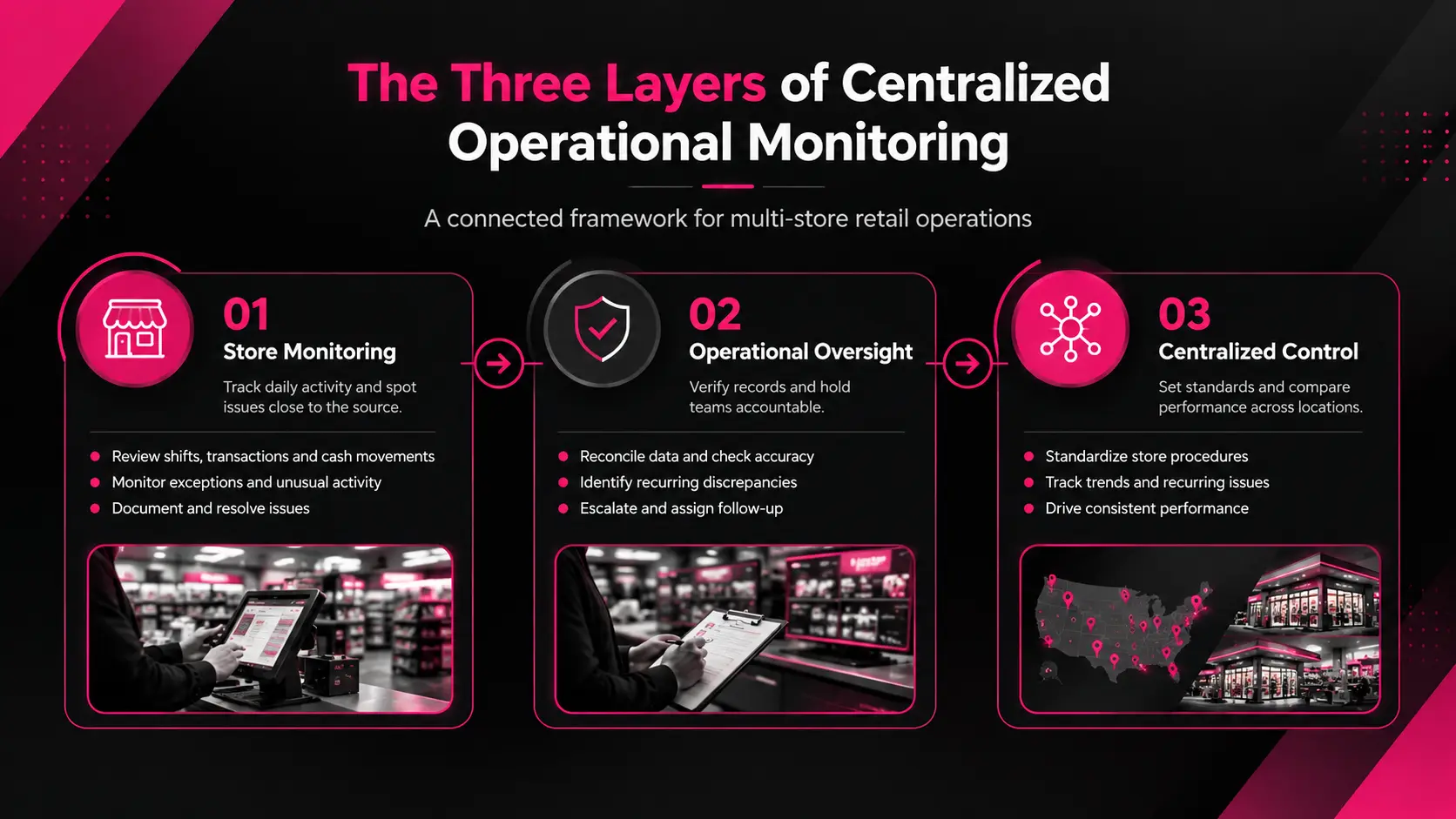
The Three Layers of Centralized Operational Monitoring
An effective monitoring framework connects store-level activity with independent review and consistent company-wide procedures.
1. Store Monitoring: Shift-Level Visibility
Problems are easier to investigate when they are identified close to the time they occur. Operators should establish a process for reviewing relevant activity throughout the day and during shift closeout.
- Review exceptions: Monitor available sales records, cash movements, fuel transactions, lottery activity, register voids, and refunds according to the store’s systems and procedures.
- Investigate discrepancies promptly: Compare unusual results against supporting records while transaction details and employee recollections are still accessible.
- Document resolution: Record the issue, the person responsible for investigating it, and the corrective action taken.
The goal is to shorten the time between a discrepancy occurring and someone taking responsibility for resolving it.
2. Operational Oversight: Independent Verification
Store-level records should not be accepted without appropriate checks. A second-level review creates accountability and reduces reliance on a single person’s calculations or judgment.
- Separate responsibilities: Where staffing allows, the person responsible for counting cash should not be the sole person approving the reconciliation.
- Compare independent records: Review register reports alongside relevant cash counts, deposit records, and supporting documentation.
- Escalate unresolved differences: Establish thresholds and procedures for referring discrepancies to an area manager or central operations team.
Independent verification does not eliminate every error or guarantee that misconduct will be detected. It makes the process more consistent and creates a stronger basis for investigating exceptions.
3. Centralized Control: Consistent Standards Across Locations
A multi-store network needs shared operating standards without ignoring legitimate differences between locations.
- Standardize core procedures: Define common requirements for shift closeouts, cash handling, inventory adjustments, and discrepancy documentation.
- Compare performance consistently: Use the same definitions and reporting periods wherever possible so that differences between stores are meaningful.
- Track recurring issues: Identify locations, transaction types, or processes associated with repeated exceptions, then assign corrective actions and follow-up dates.
Centralized control gives leadership a clearer view of network-wide patterns while allowing store managers to handle routine decisions within established boundaries.
Build a Monitoring Process That Scales With Your Retail Chain
Growing convenience retailers need both operational visibility and a reliable way to verify what their systems report. Retail dashboards help leadership understand recorded activity, while standardized reconciliation and independent reviews help establish whether that activity is accurate and complete.
The practical starting point is to identify the recurring discrepancies that consume the most time or create the greatest financial exposure. Review recent shift reconciliations, invoice discrepancies, register exceptions, and unresolved inventory adjustments. Then establish clear ownership, consistent review procedures, and a method for tracking corrective actions across locations.
With centralized operational monitoring supported by tools such as MercuryOne and managed workflows such as MostEdge Store 360, retailers can build a more consistent approach to oversight as their networks expand. The objective is not simply to collect more data. It is to turn available information into timely investigations, accountable decisions, and better centralized operational control.


7 Fuel Pricing Strategies That Protect Margins

7 Common Vendor Invoice Mistakes That Impact Profitability

5 Inventory Management Problems That Start Before a Product Reaches the Shelf
Explore More

Trusted By Many
Become A Part Of It


